
Manishka’s Story: a Diabetic Cat
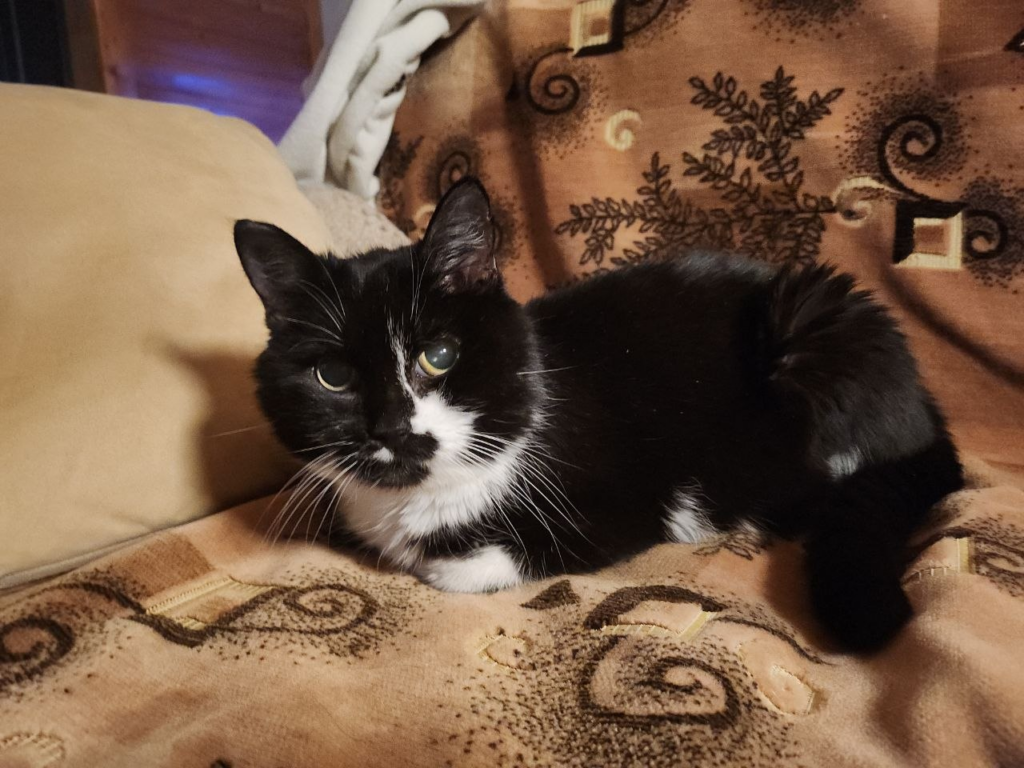
October 2025 split our family life into “before” and “after”. Our cat Mishka was diagnosed with diabetes mellitus. At first the word sounded like a sentence: glucose checks, insulin injections, and the constant fear of missing a dose or overlooking a decline.
For the first two weeks I kept everything in a paper notebook: morning glucose, evening glucose, insulin dose, appetite, weight. The notebook kept getting lost, notes got mixed up, and at appointments the vet would look at my scribbles and say honestly: “I can’t see the trend.” The hardest part was not the disease itself but the feeling that I had lost control.
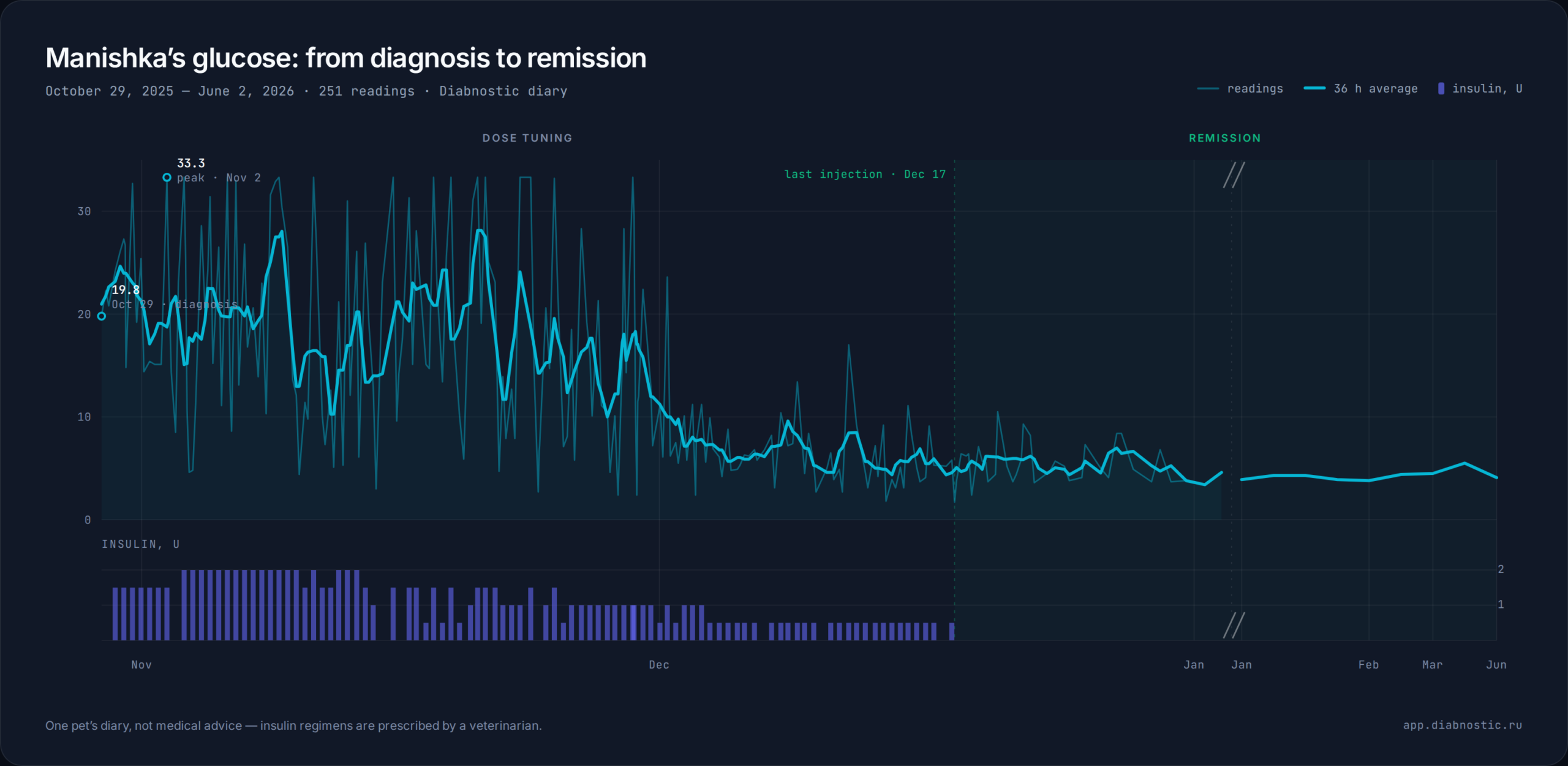
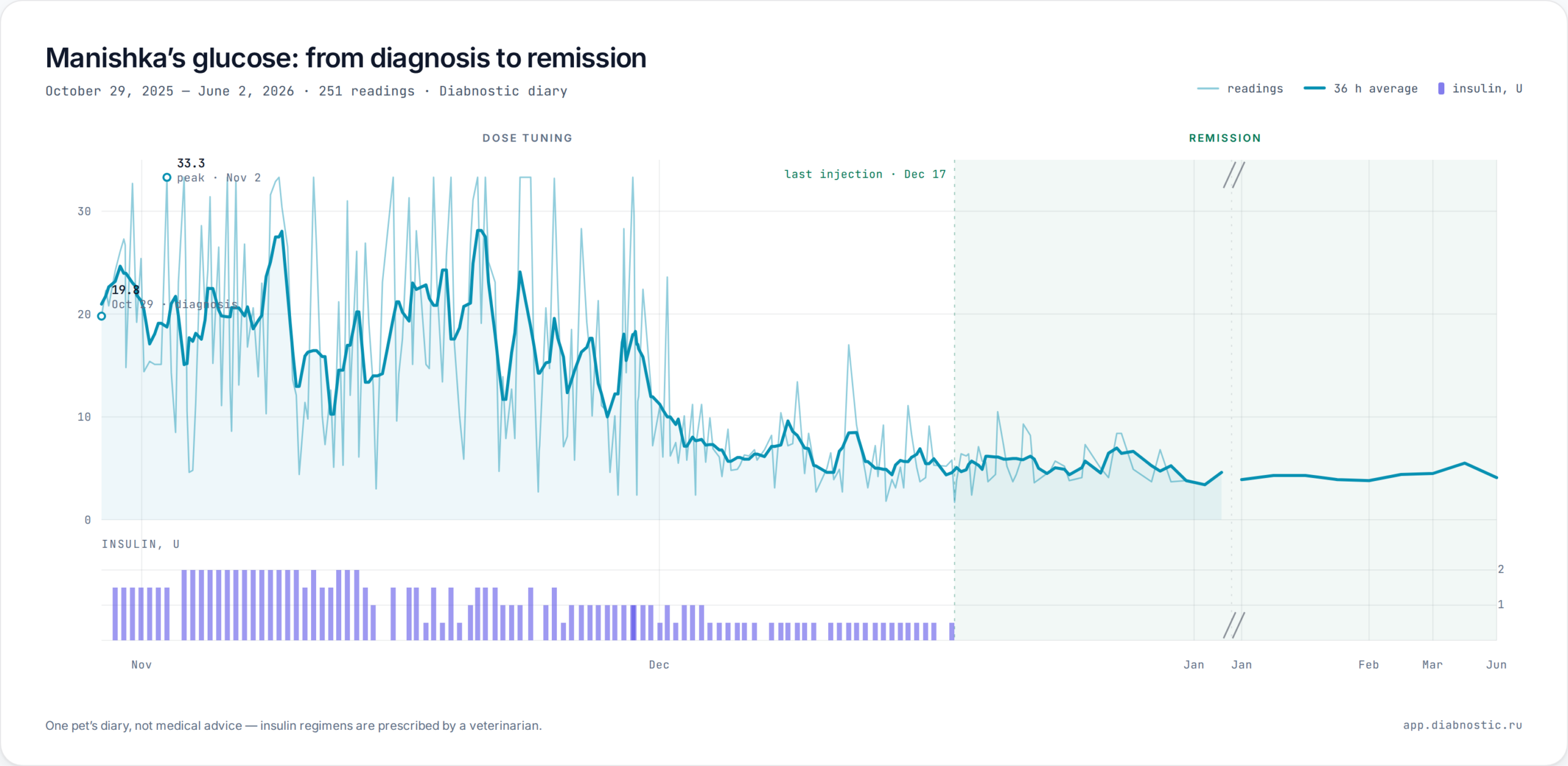
That is when Diabnostic was born. We moved every measurement into the diary: glucose, insulin, weight, blood pressure — all in one place. Charts built themselves, the target range was highlighted, and for the first time in a month I saw not random numbers but a line. A line that was gradually flattening out.
December 2025. The vet looked at the six-week chart, at the stable readings and the gently decreasing dose — and said the word we had been waiting two months for: “Remission.” Under the vet’s supervision we lowered the insulin dose step by step until Mishka no longer needed it.
Today Mishka runs around, demands food on schedule and has no idea she was ever a “difficult patient”. We still keep measuring: remission is not “cured and forgotten”, it is a monitoring routine that helps you spot a relapse before it becomes a problem.
An important note
Our story is our story — not a promise. Diabetes in animals runs differently: some reach remission, some need lifelong therapy, and both scenarios are normal. Never adjust insulin doses or diet on your own: any change must go through your veterinarian.
Diabnostic is a diary, not a doctor. It helps you collect data, see the trend and share it with a specialist. Treatment decisions belong to the vet, not to the app.

Who I am
My name is Eldar, I am Director of Cloud Infrastructure and DevOps at a bank, 18+ years in IT. In October 2025 our cat Manishka was diagnosed with diabetes — and I built the tool I was missing: a log of readings, doses and charts that makes sense without a veterinary degree. Diabnostic grew out of that log. This is our story, not a promise: every animal's diabetes runs its own course, and every decision belongs with your vet.